
Q3 2026 Market Update: Equity Markets Shrug Off Higher Rates, AI Concerns; Bond Market Sells Off
2026 has been a year of two markets: resilience and strength for the equity markets; but turbulence and volatility in the bond markets.
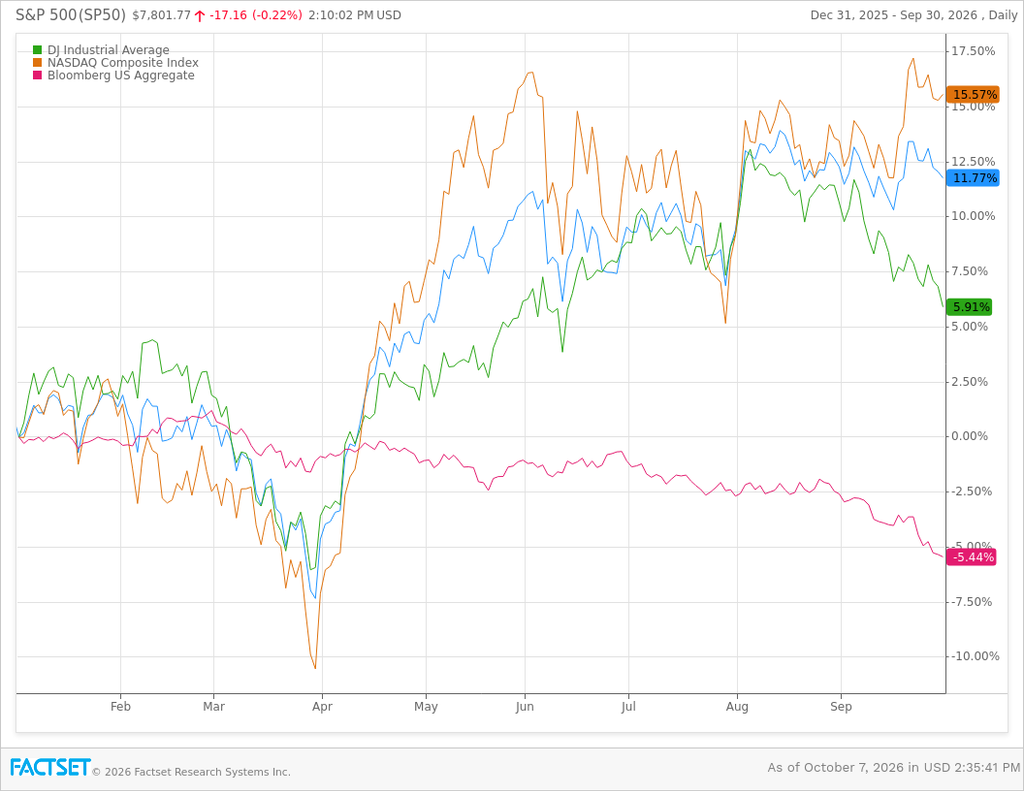
The equity markets started the year at record high levels, but dropped significantly in late March after the unexpected attack on Iran. Equity markets recovered with a dramatic rebound in the second quarter, despite the unresolved geopolitical unrest, and were resilient through the third quarter despite a worsening interest rate environment, high oil prices, increasing concerns over AI safety, midterm election noise and continued conflict in the Middle East. The S&P 500 Index increased nearly 12% year-to-date through the third quarter, and 2% in the third quarter. The tech-heavy NASDAQ Index was up over 15%, and the stodgier DJIA Index up nearly 6%.
The bond markets were a different story. Accelerating inflation caused the Fed to shift its policy from cutting rates, to pausing, and then in September the Fed raised short-term rates to attempt to contain inflation. Yields on the 10-year U.S. Treasury, a key benchmark for the global markets, have risen rapidly this year, and at the end of the quarter were ~5.3%, 1% more than where rates started the year. The Bloomberg Aggregate, a key benchmark for the fixed income markets, saw a rapid decline, -4% in the third quarter and over -5% for the year.
Q3 2026: Key Points
- Short-term and long-term interest rates moved higher. The Federal Reserve increased short-term rates to a target range of 3.75-4%, and U.S. Treasury 10-year yields rose nearly a percentage point to 5.3%.
- The conflict in Iran continued. Crude oil price have increased over 50% this year and diesel is at record levels. The closure and disruption of the Strait of Hormuz has caused shipping bottlenecks and higher prices for goods.
- The AI rally faltered this quarter as companies and whistleblowers warned on AI’s potential safety risks. Upcoming IPOs, including Anthropic and OpenAI’s, have been postponed.
- Market participants have largely shrugged off any bad news, and despite the challenges, equity markets have been resilient.
What to Watch
The key items to watch as we move through the rest of this year include:
- A potential resolution of the Iran war, which would bring down oil prices, slow down inflation and lessen the impact on the federal budget deficit. We may see some progress after mid-term elections.
- The future path of interest rates. Will a Federal Reserve tightening cycle continue? If so, we’ll have a broader-based slowdown. Should the Fed return to rate cuts, the market will react positively. As well, how will 10-year U.S. Treasuries trend? Continued rate increases will slow down the US and global economies, but would increase returns on bonds for investors.
- How will the AI companies affect the markets? When will we see IPOs from Anthropic and OpenAI? Will those IPOs, and all the debt AI companies are issuing, crowd out the rest? Will broader environmental and security concerns slow down AI overall? When will we see real productivity gains, which may provide a tailwind to companies?
- Mid-term elections will be over soon – and then market focus will shift to the next two years and the next Presidential election in 2028, with potential shifts in policy goals.
- We are in corporate earnings season. How will AI earnings trends, and how will earnings trend in the markets overall? Will the strength continue, bolstering the markets?
This material has been prepared for informational purposes only. All opinions and estimates constitute the firm’s judgment as of the date of this publication and are subject to change without notice. This material is not intended to provide, and should not be relied on for tax, legal or accounting advice. It is not intended as an offer or solicitation with respect to the purchase or sale of any security. Investing may involve risk including loss of principal. Past performance is no guarantee of future results.