

Why The Disruption in the Bond Market Matters to You and A Quick Bond Explainer
The U.S. bond market is a ~$60 trillion market and is the foundation of the global borrowing markets. It includes bonds issued by the U.S. Treasury, municipal bonds and corporations. U.S. Treasuries, backed by the taxing authority of the U.S. government, are considered risk-free and provide the baseline rate for pricing other debt. When rates rise quickly, as they have this year, borrowing quickly becomes more expensive and floating rate payments climb, pushing some borrowers toward default.
Bond Market Sell-off This Year
This year, we’ve seen a rapid decrease in the prices of bonds this year, called a sell-off. Bond prices move in the opposite direction to yields, so as yields rose, prices fell. The 10-year U.S. Treasury, a key benchmark rate, ended the third quarter at ~5.3%, about 1 percentage point higher than at the start of the year. Several factors have driven rates higher, including:
- Higher oil prices and accelerating inflation
- Higher U.S. government deficits
- The Federal Reserve’s (the “Fed”) shift from cutting rates, to pausing, and raising rates in September
- Strong economic growth, fueled by AI investment
- AI company debt issuance
How The Bond Market Affects Individual Investors
Treasury yields affect consumer borrowing costs across the economy. As they increase, so do mortgage rates, and auto loans. For investors, rising rates can negatively impact the value of existing bond holdings. However newly issued bonds pay higher coupons, so retirees and others who rely on bond income will earn more.
Bond Basics
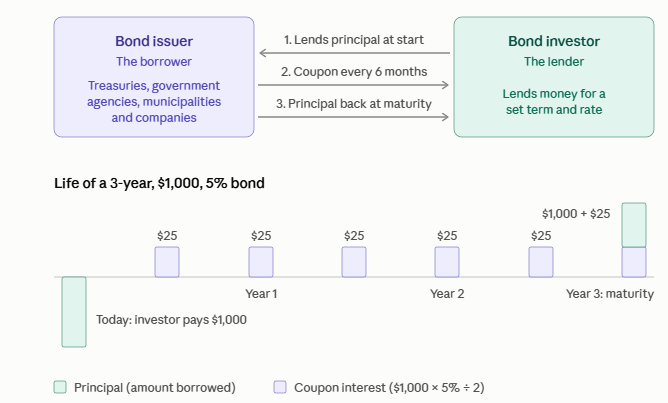
A bond is a form of a loan, or debt. The entity issuing the bond and taking on debt is the borrower, and can be the U.S. government, a corporation like Wal-mart, or a municipality like a school district in Colorado. The lender is the bond investor, or buyer. Essentially, the bond investor is lending money to the bond issuer for a certain period of time (called the “term” or “maturity”) at a certain interest rate (called a coupon). The bond issuer pays back the bond principal (amount borrowed) at the end of the term, or at maturity. Payments are made at set periodic intervals, usually semiannually, which is why bonds are also called “fixed income”.
Source: Created with Claude.ai
The interest rate bond issuers pay is important. This is called a coupon when the bond is first issued, and the coupon rate does not change over the term of the bond. A bond yield is the investor’s actual return based on the bond’s current market price and coupon payments, and changes as the bond trades.
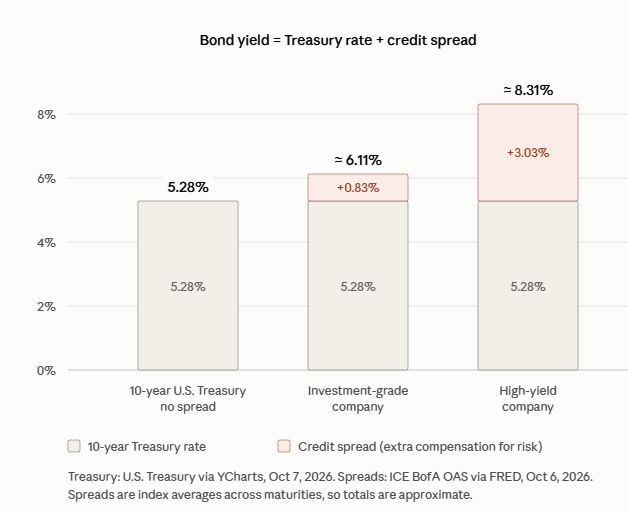
Borrowers must set coupons at rates which reflect the term of the bond and the credit risk of the bond issuer. The U.S. Treasury rate is the starting point. Then, a “credit spread” is added, reflecting the riskiness of the borrower. A “high-yield” or “junk” company is one with more potential credit risk, and must pay more to compensate investors for the extra risk. Think of it in terms of a mortgage – the higher your mortgage rate is, the higher your monthly payment. Higher rates also mean that debt is harder to manage in general, and because the overall cost of borrowing is higher, the economy slows.
Source: Created with Claude.ai
Abrupt Move Back to Normal?
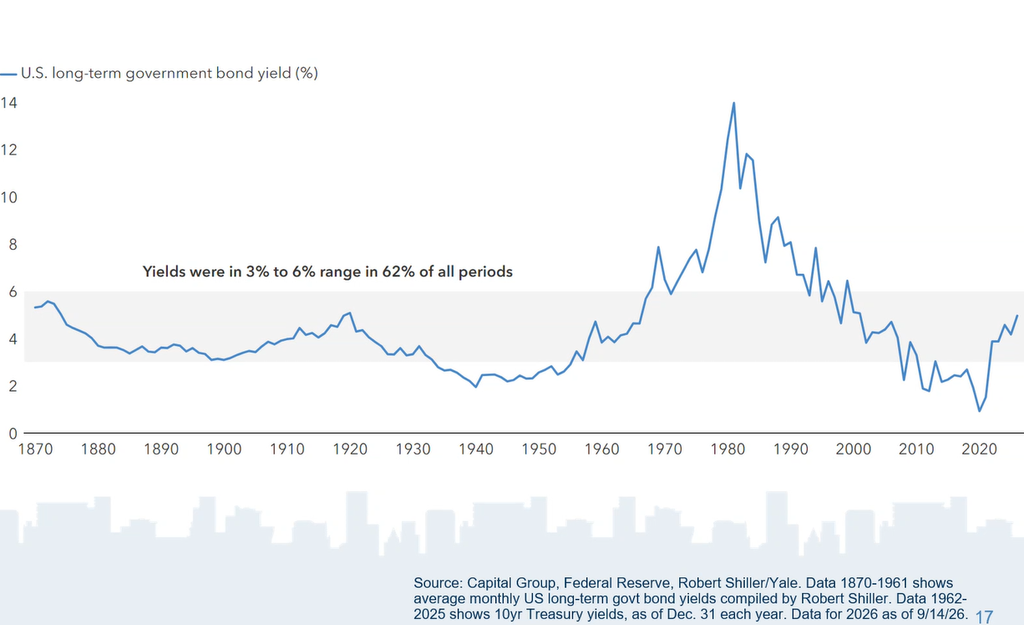
Rates moved up rapidly this year, and the move was more jarring as we have been in near-zero or zero interest environment for such a long period of time. However, current rates are relatively normal when viewed over the long term (see below).
Source: Focuspoint Solutions, Ryan Long, CFA, 10/15/2026
The bond market gets less attention than the stock market, typically doesn’t make the news unless something breaks and affects financial markets broadly. However, given the rapid changes this year, it’s worth understanding the basics and keeping an eye on this important market.
This material has been prepared for informational purposes only. All opinions and estimates constitute the firm’s judgment as of the date of this publication and are subject to change without notice. This material is not intended to provide, and should not be relied on for tax, legal or accounting advice. It is not intended as an offer or solicitation with respect to the purchase or sale of any security. Investing may involve risk including loss of principal. Past performance is no guarantee of future results.